About Dharmapuri District (Tamil Nadu)
Dharampuri district is a district of the Tamil Nadu state with its administrative headquarters located at Dharampuri town. During the Sangam era the place, Dharmapuri was popularly known as Dhagadur or Tagadur. The term Tagadur is derived from the two words one is "Thagadu" meaning iron ore and another one is "Oor" meaning place. After the end of the sangam period, probably during the period of Vijayanagar Empire or Mysore empire period the name of the place was changed from Tagadur to Dharmapuri. During the Sangam era, Adigaman Naduman Anji is the first renowned chieftain who ruled the place Tagadur and also admired by the famous Tamil poetess called Avvaiyar. In the 8th century the place was under the control of the Pallava regime. In the early period of the 9th century, the place was ruled by the Rashtrakutas whose rule continued in it for the next two centuries. After sometime Cholas came to the region and defeated the Rashtrakutas. Later in the 18th century the place, Dharmapuri was a part of the Mysore kingdom. Finally, the British rule was started in the whole country and the present district of Dharmapuri became a part of the Salem district until India got its independence in the year 1947. At last Dharmapuri was emerged as a separate district in the map of the state of Tamil Nadu on 2nd October, 1965.
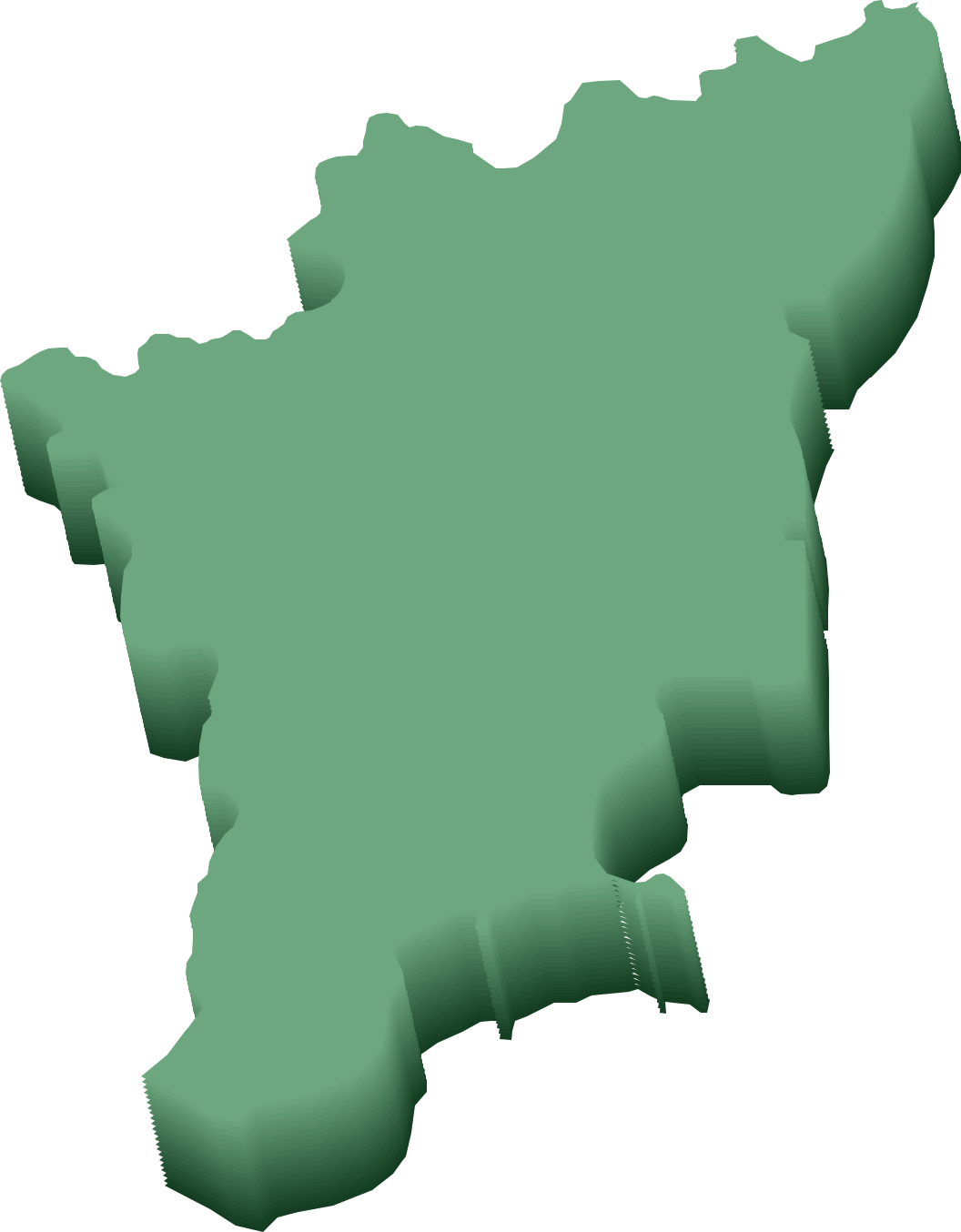
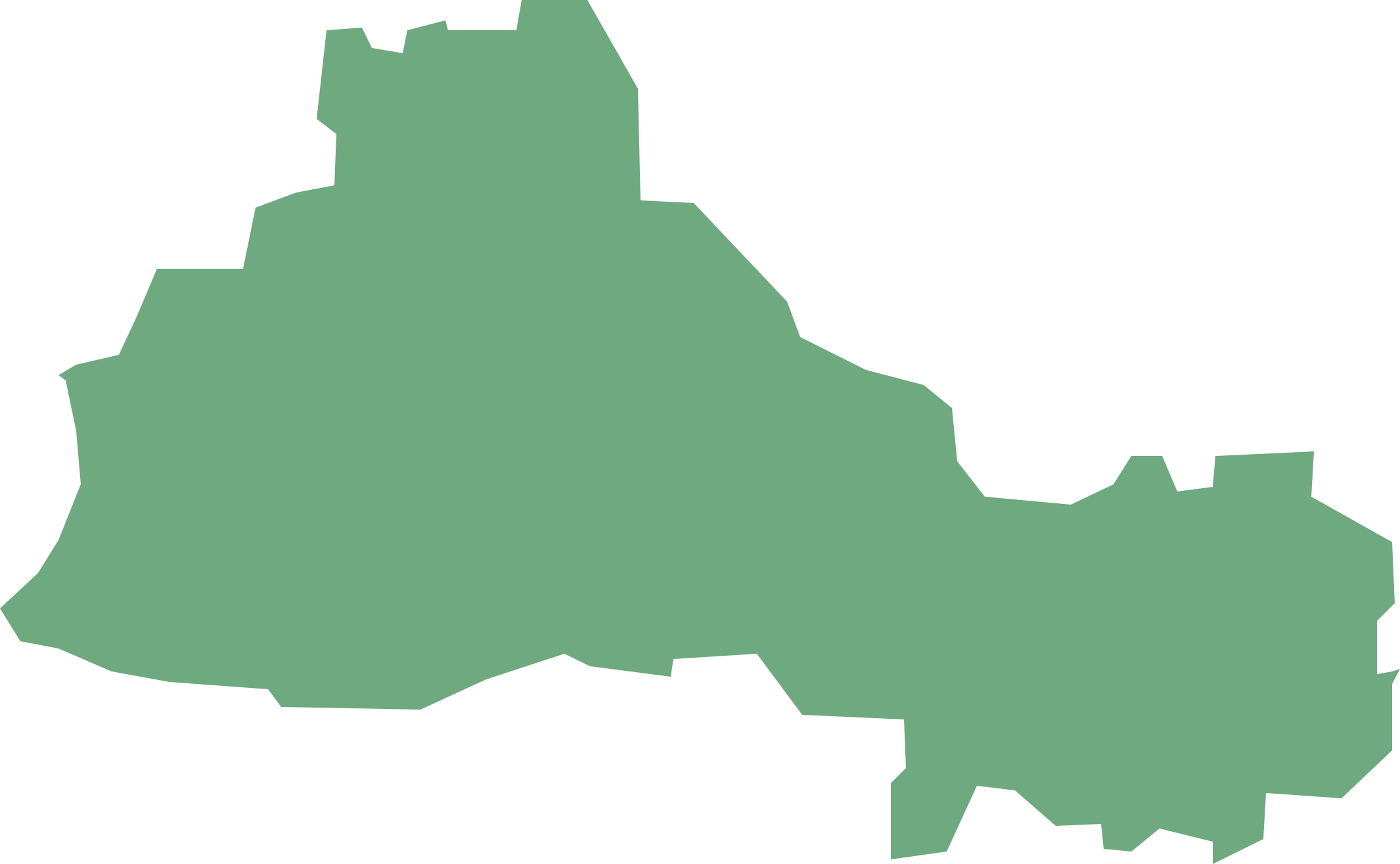
Geographically, the district lies at 12°13'N latitude, 78°16'E longitude and 468 m altitude. In the year 2023, there was a total 38.17% forest area of total geographical area. The district encompasses a geographical area of 4,497 sq. km. and it is bounded by Krishnagiri district on the North, Salem district on the South, Tiruvannamalai and Viluppuram districts on the East and Chamarajanagar district of Karnataka on the West. The climate of the district is not too hot in the summer and not too cold in the winter. Most of its rainfall occurs in the monsoon season. The actual rainfall in the district was 1059.2 mm in the year of 2024-2025.
Administration wise, the district is divided into 5 taluks namely Dharmapuri, Harur, Palakkodu, Pennagaram and Pappireddipatti. Moreover, it comprises 13 towns and 486 villages. The administrative language in the district is Tamil.
According to 2011 census the district has a population of 15,06,843 out of which 7,74,303 are males and 7,32,540 are females. The district has a sex ratio of 946 (females for every 1000 males). Furthermore, the district has projected population of 18,37,580 comprising 9,45,561 males and 8,92,019 females for the year 2026. According to the National Family Health Survey (NFHS-5, 2019–21), the district has an estimated sex ratio of 1,192 females and a child sex ratio of 1,047 females per 1,000 males. During the year 2001-2011 the population growth rate in the district was 16.34% including 15.48% were males and 17.27% were females. As per 2011 census the major religion in the district is Hindu with 96.42% of the total population. The population density in the district is 335 persons per sq. km. According to 2011 census the principal languages in the district are Tamil with 87.90% and Telugu with 6.51%. In the year 2023 the number of live births in the district was 25,099 out of which 13,169 were males and 11,930 were females. In the same year the number of deaths in the district was 12,385 out of which 7,397 were males and 4,988 were females.
Agriculture is the backbone of the economy of the district. More than half of its population are engaged in agriculture in order to earn their livelihood. Most of the lands in the district are use for agricultural purposes. The chief agricultural products in the district are paddy, millets, pulses, sugarcane, chilli, etc. The adoption of the new agricultural technologies amongst the farmers of the district helps to increase the production of various agricultural items. In the whole state of Tamil Nadu, Dharmapuri is one of the core horticultural belts and mango is the prime horticulture crop of the district. Since it is an inland district hence fishing is a source of extra income for its natives. The district is rich in mineral resources as well. Granite, quartz, molibdinum, etc are the commonly found mineral resources in the district. Industrially, also the district is quite well developed. Industries of textile, mineral based, chemical based, electronic products, etc are some of the principal industries in the district. In the year 2023-2024 the Gross Domestic Product in the district was Rs. 48,51,481 lakh at current price and Rs. 24,59,636 lakh at constant 2011-2012 prices. The Net Domestic Product in the district during the period 2023-2024 was Rs. 44,63,214 lakh at current price and Rs. 22,06,146 lakh at constant 2011-2012 prices. The Per Capita Income or NDDP, At Factor Cost in the district during the period 2023-2024 was Rs. 2,77,554 at current price and Rs. 1,37,193 at constant 2011-2012 prices.
The district is well known as an abode of several reputed educational institutions. It provides a platform for higher education. As per 2011 census the literacy rate in the district is 68.54% including 76.85% are males and 59.8% are females. The total number of literates in the district is 9,17,709 including 5,27,599 are males and 3,90,110 are females. In addition, according to the Periodic Labour Force Survey (PLFS) for the period July 2023-June 2024 estimated literacy rate in the district is 81.49% including 87.28% are males and 75.39% are females (Age 7 Years and Above).
The district has several centres of attraction which allures many travellers from different parts of the country as well as world. Hogenakkal Falls, located at a distance of 46 Km. from the Dharmapuri town got its name a Kannada term “Hogenakal” which means smoky rocks since the gushing force of its water creates a smoke-like mist when it falls on the rock below. Theerthamalai, a sacred place in the district has a famous temple called Theerthamalai temple which is located at the top of a hillock. During the occasion of Maha Shivarathiri, devotees from far off places come to this temple to offer their prayers. Hanumanthathirtham, another pious place located on the bank of Pennaiyar almost 10 Km. away from Uthangarai in the district is associated with an interesting mythological story of Hanuman, a mythological character. Some other places of interest in the district are Kottai Kovil, Adhiyamankottai, Subramanya Siva Memorial, Mount Carmel Church, Sitheri hills and many more. During the year 2024 there were 22,29,167 domestic tourists who visited these places of the district.